What it does
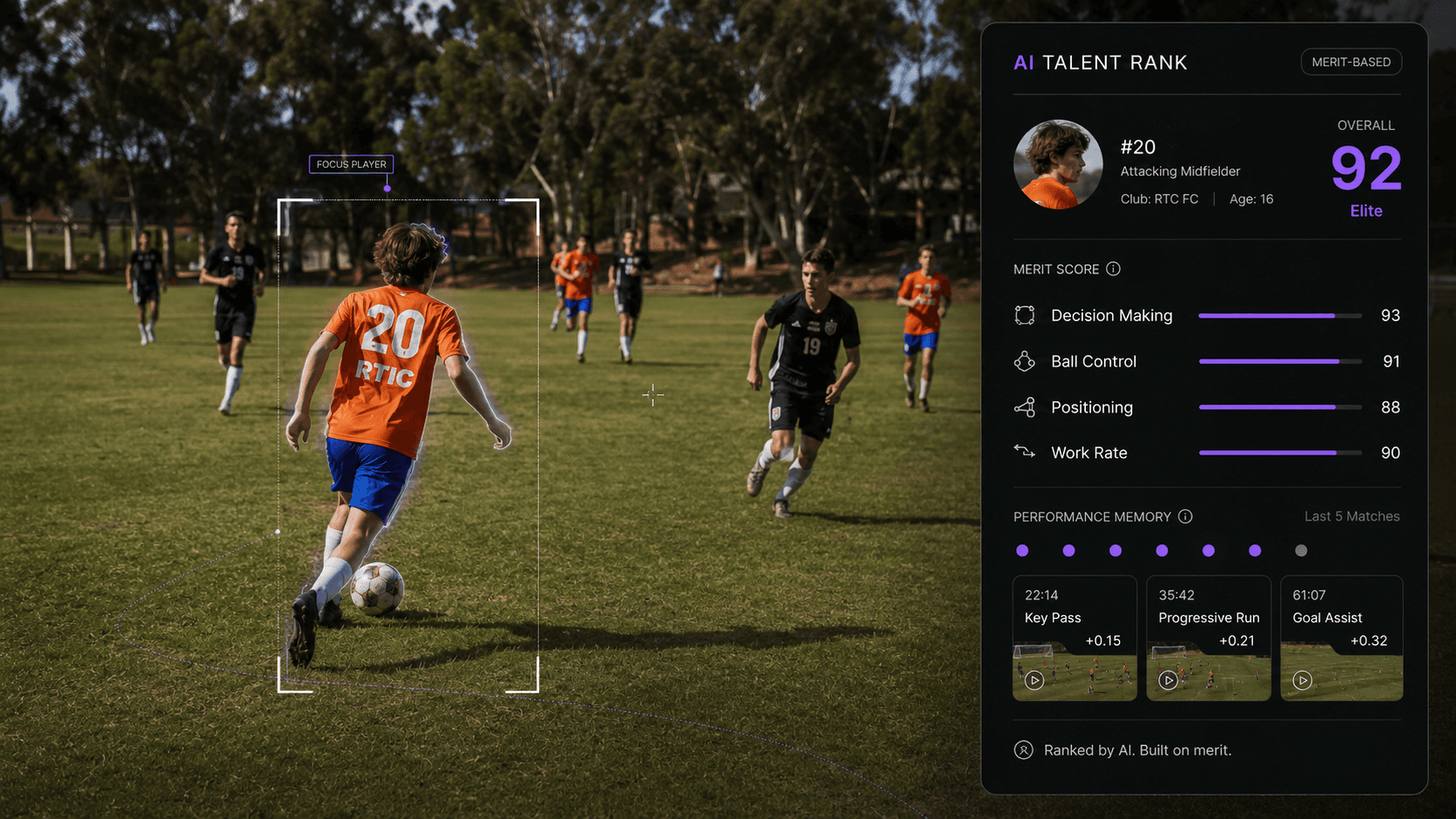
Two layers, one dataset. The tracking layer draws a thread through the chaos of a match: it follows one athlete through every frame, holds them through crowded phases of play and re-acquires them after occlusion. The scoring layer turns what the tracking sees into structured events, touches, passes, shots, tackles, defensive actions and movement off the ball, and rolls those events into TalentRank, a position-aware performance score.
For athletes
You get ranked on your football, not your following. An athlete in a regional town with no social media presence sits on the same scale as one at a school with a media department, because the input is identical for both: what the model saw them do on the pitch. And because the score builds match by match, it rewards a season of consistency rather than one lucky clip.
For scouts and clubs
TalentRank is what makes the athlete pool searchable rather than just browsable. Filter by sport, position, age band and region, sort by score, and trust the number, because every score is evidence-linked. Click it and watch the exact moments that produced it. Nothing on Neylo asks a scout to trust an algorithm blind, and nothing scores a defender like a striker.
Where it fits
A two-sided marketplace lives or dies on whether the paying side trusts the ranking. TalentRank is that trust layer. Evidence over followers is not a tagline for us, it is the design constraint: no score exists on Neylo that cannot be traced back to footage.
How it’s built
Keypoint tracking with re-identification handles the vision side. On the data side, every athlete is scored against one shared event taxonomy, which is what makes scores comparable across clubs, regions and footage quality. The event data lands in a structured store on Google Cloud that powers both scoring and scout search. Both components are built and are being integrated into the app now.